BMC Elections
- Past BMC Election Results
- Know your Booth Location
- Standing Committee Members
- BMC Elections 2017 Delimitation
- New Ward List Civic Elections 2025
- New Wards Maps for BMC Elections 2025
- BMC Election 2025 Date
- CEO Maharashtra
- Know Your BMC
- BMC News & Updates
- Wards
- Candidates
- Mumbai Corporators
- Advertise
- Contact
- Volunteer
- Privacy Policy
Sena's Shinde faction strengthens its cadre in Mumbai's Thackeray stronghold with a sight on the BMC elections 2022
- by Webdesk
- 01 Sep 2022
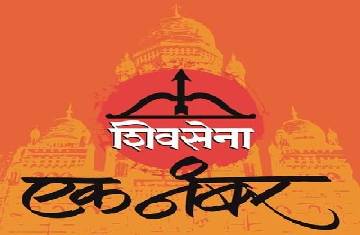
The party group headed by Maharashtra Chief Minister Eknath Shinde has begun work on fortifying Mumbai, the organization's weakest link, amid disputes over who is the "true" claimant of the Shiv Sena and its emblem. The Uddhav Thackeray-led Shiv Sena group is being challenged by the Shinde-led Shiv Sena group in the upcoming Mumbai Municipal Elections. The Shinde-led Shiv Sena group has established an organizational framework in the city and is currently strengthening its local cadre.
The Supreme Court is currently hearing arguments in the dispute over who is the Shiv Sena's official leader and who gets to preserve the party's bow and arrow emblem. Mumbai, which has always been a stronghold of the Thackeray family, is the weak link in the Shinde camp. Bal Thackeray was able to form the Shiv Sena in 1966 thanks to the city's political and social institutions in the 1960s.
The city of opportunity, where people from all over the nation flocked to build a future and competed with Maharashtrians for opportunities in the process, turned out to be a good foundation for the Sena to establish its base on and expand. The party's grassroots cadre has remained loyal to the Thackerays even after Shinde broke with 40 MLAs, bringing down the Thackeray-led Maha Vikas Aghadi (MVA) government, and forming a government with the BJP.
Five of the 40 MLAs that left Thackeray's administration are from Mumbai. One of the three MPs for the Sena in Mumbai, Rahul Shewale, is a Shinde supporter. The Borivali-Magathane region received the first divisional head appointment from the Shinde camp last week. The CM appointed three divisional administrators and five more divisional heads in Mumbai at a lengthy meeting of camp leaders on Monday.
Two to three areas have been given to each divisional head. There have already been appointments set up for places like Dadar, Mahim, Chembur, Sion, Anushakti Nagar, Borivali, Bhandup, Vikhroli, Mulund, Kurla, Mumbadevi, Malabar Hill, and Colaba.
These divisional heads are responsible for establishing the party's shakhas (branches), which are the smallest organizational units. Ideally, there should be a branch in each councillor ward.
These ward-level shakhas are one of the factors contributing to the Shiv Sena led by Thackeray's iron-like hold on Mumbai. The shakhas organize local workers and function as a parallel administrative apparatus, taking care of problems with the local government like clogged drains and filthy restrooms.
Former Thane mayor and Shinde group leader Naresh Mhaske stated to ThePrint, "We are focusing on creating our own public relations offices and shakhas throughout the city. By naming vibhag pramukhs, we have already taken the first step (divisional heads). They will now work to create shakhas and appoint leaders to serve them. No deadline has been set, although completion is the goal.
An event for party members was organized in his area earlier this month, and according to T. Mangesh Kudalkar, a vibhag pramukh and Shiv Sena MLA who defected to the Shinde camp, "the auditorium was packed." "There were approximately 1,500 people inside the hall and an equal amount outside.
I am currently working with Ganesh mandals and also organized Dahi Handi on a much larger scale. Many have already changed sides, and the remaining ones will follow once they witness our work, he said. A central office would be built in Dadar, according to Sada Sarvankar, a third Mumbai Shiv Sena MLA who joined Shinde earlier this month. Shiv Sena Bhavan, the organization's headquarters under Thackeray, is located in Dadar.
Image Courtesy: Twitter @Sena_Tweets
Image Courtesy: BMC Elections 2022
Related News
This article is based on publicly available information from credible sources (as mentioned above) and has been restructured using a combination of AI tools and manual editorial inputs to enhance clarity and readability. While we aim to maintain accuracy, there may be unintentional errors or misinterpretations. If you come across any incorrect or misleading information, please report it to us at info@bmcelections.com.
Copyright © 2026 All Rights Reserved | BMC Election