BMC Elections
- Past BMC Election Results
- Know your Booth Location
- Standing Committee Members
- BMC Elections 2017 Delimitation
- New Ward List Civic Elections 2025
- New Wards Maps for BMC Elections 2025
- BMC Election 2025 Date
- CEO Maharashtra
- Know Your BMC
- BMC News & Updates
- Wards
- Candidates
- Mumbai Corporators
- Advertise
- Contact
- Volunteer
- Privacy Policy
Mumbai civic polls: NCP to approach State Election Commission, alleges bias favouring BJP–Shiv Sena candidates
- by Webdesk
- 02 Jan 2026
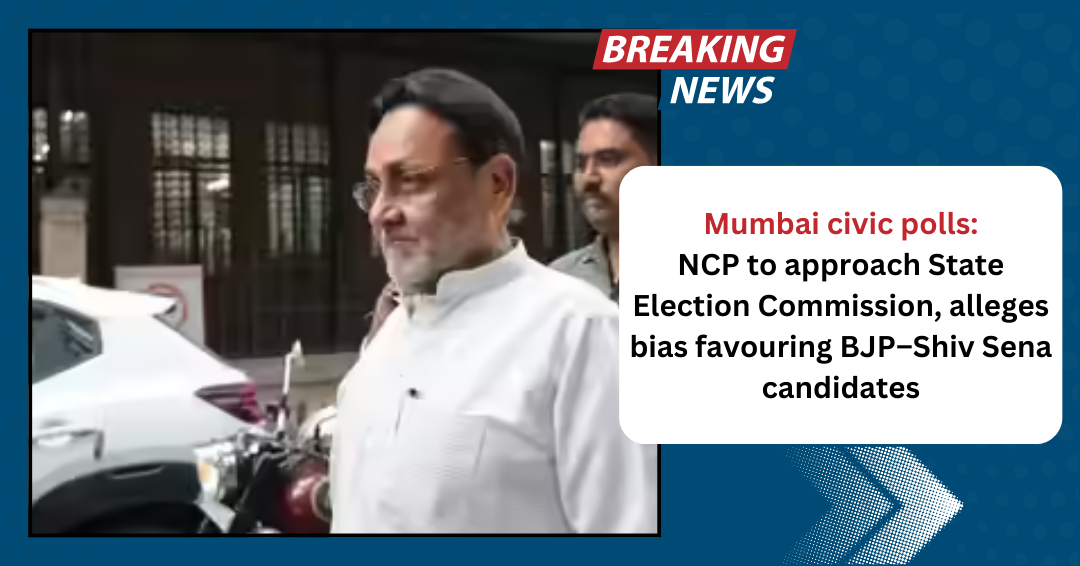
Source: The Times Of India
Mumbai: Allegations of bias in the Brihanmumbai Municipal Corporation (BMC) elections are no longer limited to opposition parties. The Nationalist Congress Party (NCP), which is a constituent of the ruling Mahayuti coalition in Maharashtra, has also decided to approach the State Election Commission (SEC) with complaints against election authorities. The party has alleged that returning officers in at least three Mumbai wards showed favouritism towards candidates from the BJP and Shiv Sena by accepting nomination forms that, according to rules, should have been rejected.
Although the NCP shares power at the state level with the BJP and the Shiv Sena, it has chosen to contest the BMC elections independently. In contrast, the BJP and Shiv Sena are fighting the civic polls as allies. This political contrast has added a new dimension to the allegations being made by the NCP, which claims that the election machinery has not acted impartially in certain wards.
NCP leaders have indicated that the party will formally write to the State Election Commission and may also file election petitions in specific cases where it believes the rules were overlooked to benefit BJP and Shiv Sena candidates. The party has maintained that such actions undermine the fairness of the electoral process and raise serious questions about the conduct of the civic polls.
At the same time, the NCP has projected confidence about its performance in the BMC elections. Party leaders have suggested that no single party or alliance is likely to secure a clear majority, resulting in a hung house. In such a scenario, the NCP believes it could play a decisive role in the formation of the civic body and even stake a claim to the mayor’s post.
NCP leader Nawab Malik, who is heading the party’s campaign for the BMC elections, said the party is prepared to act as a kingmaker if required. Drawing a comparison with political developments in other states, Malik remarked that even a party with a relatively small number of seats can secure top positions if the numbers work in its favour. He indicated that if the NCP manages to win around 30 seats, it could still lay claim to the mayor’s position in a fractured mandate.
Detailing the alleged irregularities, Malik said the NCP would approach the SEC and also move election petitions in three cases where returning officers allegedly favoured BJP and Shiv Sena candidates. According to him, these instances clearly show selective application of rules during the scrutiny of nomination papers.
In Ward No. 119, Malik alleged that the nomination form of a Shiv Sena candidate was accepted despite the candidate being a vendor of the BMC, which is not permissible under election rules. He claimed that such a nomination should have been declared invalid at the scrutiny stage itself.
In another case from Ward No. 87, Malik said the nomination of a BJP candidate was accepted even though the mandatory caste certificate was not submitted. When objections were raised by the NCP, election officials reportedly stated that the candidate had filed an affidavit mentioning details of her father’s caste certificate. Malik questioned this explanation, arguing that it did not meet the legal requirements laid down for candidates.
The third instance cited by Malik involved another BJP candidate whose nomination was accepted despite the candidate allegedly being involved in a case related to illegal construction. Malik claimed that such pending issues should have been considered before clearing the nomination form.
Apart from the allegations related to election procedures, Malik has also faced criticism over claims of nepotism within the NCP’s candidate selection process. The party has fielded three of his relatives in the BMC elections. His brother, Kaptan Malik, is contesting from Ward No. 165 in Kurla, his sister, Saeeda Khan, from Ward No. 168, and his niece, Bushra Malik, from Ward No. 170, also in Kurla. Malik’s daughter, Sana Malik, is already serving as a Member of the Legislative Assembly.
Responding to these allegations, Malik defended the party’s decisions. He stated that two of the candidates are sitting corporators and have a track record of public service. He also argued that his brother and sister have their own independent families and political identities, and therefore cannot simply be described as his immediate family members for the purpose of such criticism.
Malik further added that political parties are free to field relatives of leaders, and the final decision always rests with the voters. According to him, what matters is not who has been given a ticket, but whether the electorate chooses to support that candidate at the ballot box.
Image Courtesy:
Related News
This article is based on publicly available information from credible sources (as mentioned above) and has been restructured using a combination of AI tools and manual editorial inputs to enhance clarity and readability. While we aim to maintain accuracy, there may be unintentional errors or misinterpretations. If you come across any incorrect or misleading information, please report it to us at info@bmcelections.com.
Copyright © 2026 All Rights Reserved | BMC Election