BMC Elections
- Past BMC Election Results
- Know your Booth Location
- Standing Committee Members
- BMC Elections 2017 Delimitation
- New Ward List Civic Elections 2025
- New Wards Maps for BMC Elections 2025
- BMC Election 2025 Date
- CEO Maharashtra
- Know Your BMC
- BMC News & Updates
- Wards
- Candidates
- Mumbai Corporators
- Advertise
- Contact
- Volunteer
- Privacy Policy
Chief Electoral Officer
Chief Electoral Officer : Gyanesh Kumar
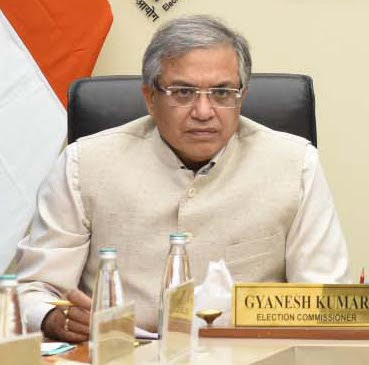
Gyanesh Kumar, born on 27 January 1964 in Agra, is a 1988-batch IAS officer of the Kerala cadre. A technocrat by training, he holds a B.Tech in Civil Engineering from IIT Kanpur and pursued further studies in Business Finance from ICFAI and Environmental Economics at Harvard University. Known for his administrative acumen and reform-oriented approach, he has held several key positions at both state and central levels over his long career.
Kumar began his career in Kerala, serving in roles such as Assistant Collector in Ernakulam, District Collector, and later as Municipal Commissioner of Cochin. His efficient handling of civic and administrative matters earned him recognition early on. At the central government level, he worked as Joint Secretary in the Department of Defence Production from 2007 to 2012, where he oversaw critical initiatives in India’s defence manufacturing sector. Later, he served in the Ministry of Home Affairs, where he handled sensitive assignments, including leading the Jammu & Kashmir division during the historic abrogation of Article 370 in 2019. He was also involved in setting up the Shri Ram Janmabhoomi Teerth Kshetra Trust, a crucial step in facilitating the construction of the Ram Temple at Ayodhya.
In May 2021, Gyanesh Kumar was appointed Secretary in the Ministry of Parliamentary Affairs, where he worked until April 2022. Later, as Secretary of the Ministry of Cooperation from May 2022 to January 2024, he introduced significant reforms in India’s cooperative sector. He played an important role in the implementation of the Multi-State Cooperative Societies (Amendment) Act, 2023, and helped establish national-level cooperative bodies like BBSSL, NCOL, and NCEL. His efforts to improve financial accountability in cooperative societies were widely appreciated, especially through the launch of the CRCS-Sahara refund portal, which aimed to return funds to defrauded depositors.
In March 2024, he was appointed as an Election Commissioner, and in February 2025, he took charge as India’s 26th Chief Election Commissioner. His appointment marked the first under the new Election Commission Act of 2023. Upon assuming office, Kumar emphasized the importance of transparency in electoral rolls, highlighting that voter lists had been shared with political parties since 1960 to ensure accountability and public participation. His tenure as CEC will continue until January 2029, during which he will oversee several major elections, including those in Bihar, Kerala, Tamil Nadu, Assam, and West Bengal.
Gyanesh Kumar’s career reflects his expertise in governance, legal reforms, and public policy implementation. His work in sensitive areas like Jammu & Kashmir, as well as his focus on cooperative reforms and financial transparency, has earned him respect across political and administrative circles. Now, as the country’s top election official, he faces the critical responsibility of ensuring free, fair, and transparent elections at a time when public trust in democratic institutions is more important than ever. His long and diverse administrative experience, combined with his reputation for integrity, makes him a key figure in shaping the future of India’s electoral democracy.
Copyright © 2026 All Rights Reserved | BMC Election