BMC Elections
- Past BMC Election Results
- Know your Booth Location
- Standing Committee Members
- BMC Elections 2017 Delimitation
- New Ward List Civic Elections 2025
- New Wards Maps for BMC Elections 2025
- BMC Election 2025 Date
- CEO Maharashtra
- Know Your BMC
- BMC News & Updates
- Wards
- Candidates
- Mumbai Corporators
- Advertise
- Contact
- Volunteer
- Privacy Policy
Supriya Sule, a member of the National Congress Party, has introduced the Right to Disconnect Bill for the second time in the Lok Sabha
- by Webdesk
- 19 Mar 2022
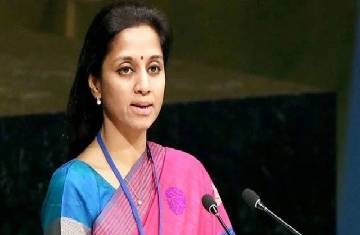
Supriya Sule, a member of the Nationalist Congress Party, has introduced the Right to Disconnect Bill in the Lok Sabha for the second time. She introduced the bill during her first term (2014-19), but it was unable to be debated in the Lok Sabha at the time.
The bill allows for flexibility in the right-to-disconnect rules and allows each corporation to negotiate its terms of service with its employees.
It recognizes employees' right to disconnect and not answer their employer's calls and emails during off-work hours, in order to respect their personal space. While the bill recognizes employee rights, it also takes into account the competitive demands of businesses and their various work cultures.
The law imposes a penalty on entities (companies or societies) for non-compliance with the bill's requirements at a rate of 1% of their total employee salary. To mitigate the negative impacts of hyperconnectivity on employees' personal life, the bill also establishes counselling programmes to raise employee and citizen understanding of the appropriate use of digital and communication tools for professional and personal purposes.
Digital transformation has a direct impact on employment contract terms such as working hours and location. As a result, if an employee agrees to work during non-working hours, he is entitled to overtime pay at his regular wage rate. This clause attempts to address the rise in unpaid overtime work brought on by digital transformation, according to Sule, who has urged "professionals, corporations, my colleagues, and public officials from across the country to tell their stories."
"Tell us about the challenges you experience in achieving work-life balance, as well as successes you've had in guaranteeing personal and family time for employees." In a video on Twitter, Sule stated, "Please offer your views and suggestions for enhancing the RTD Bill and making Right to Disconnect a reality."
In the event that the employer and employee are unable to reach an agreement during the negotiation process, the bill contains measures. In such instances, the corporation must expressly state in the Charter their out-of-work-hours needs from their employees, and the employees can choose to work or exercise their right to disconnect.
The bill also requires businesses to develop their policies for employees who work remotely, telework, or travel for work. "The bill mandates the formation of employee welfare committees in every business to aid employees in negotiating with their bosses. The measure also includes a provision to ensure that these talks take place regularly and at regular intervals to keep up with changing business demands," Sule explained.
Image Courtesy:P Twitter @Kreacher10
Image Courtesy: BMC Elections 2022
Related News
This article is based on publicly available information from credible sources (as mentioned above) and has been restructured using a combination of AI tools and manual editorial inputs to enhance clarity and readability. While we aim to maintain accuracy, there may be unintentional errors or misinterpretations. If you come across any incorrect or misleading information, please report it to us at info@bmcelections.com.
Copyright © 2026 All Rights Reserved | BMC Election