BMC Elections
- Past BMC Election Results
- Know your Booth Location
- Standing Committee Members
- BMC Elections 2017 Delimitation
- New Ward List Civic Elections 2025
- New Wards Maps for BMC Elections 2025
- BMC Election 2025 Date
- CEO Maharashtra
- Know Your BMC
- BMC News & Updates
- Wards
- Candidates
- Mumbai Corporators
- Advertise
- Contact
- Volunteer
- Privacy Policy
The civic body turns its attention to slums again due to a surge in cases
- by Webdesk
- 03 Jun 2021
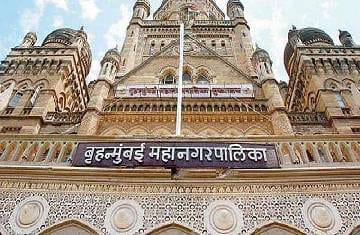
Mumbai: The BMC is gearing up for detection, testing, tracking, and treatment as it faces the threat of a third wave of Covid-19, lowering antibodies in the slum population and anticipating the arrival of migrant workers. The last two waves have shown that people with symptoms are reluctant to consult with their family doctors and go to civic amenities, and officials say they are once again immersing themselves in private practitioners.
City officials say it could be a major weapon against the third wave. Citizens' groups said fears of an outbreak of contagion in the city's slums had receded after the first wave. During the second wave, although cases were highly concentrated, experts warned that Covid-19 could take a U-turn in the third wave and endanger slum dwellers. The three serosurveys conducted at intervals over the past year have been of particular concern, as the results show that the antibodies in the slum dwellers gradually decreased and increased in the population of the non-slum areas.
The third survey in March found 41.6 percent seropositivity this year in blood samples taken from municipal hospitals (slum areas). In the first survey (July 2020) it was 57 percent and in the second (August 2020) it was 45 percent. One reason is the declining number of antibodies. A large number of people are expected to return home after the Lockdown during the second wave. This population is close to each other, there is no space in the house and public facilities are used, said Additional Municipal Commissioner Suresh Kakani.
The four T formulas - tracing, testing, tracking, and treatment - worked well in Dharavi and we will stick to it. In addition, we now have mobile testing vans and antigen tests that give short-term results. Kiran Dighavkar, an assistant commissioner of
G Northward, which includes Dharavi, Mahim, and Dadar, said the findings and investigation would therefore be crucial this time. "Our infrastructure will remain the same," Kakani said. From the experience of the last two Covid-19 waves, we know that people go to their family doctors (private practitioners) and are reluctant to come to civic facilities after developing symptoms.
The SOP for treatment should be similar, which is what we communicate with general trainers. He said the curfew centers were on standby and would be open when needed. The health officer in the L ward, where 80 percent of the slums are located, is Dr. Jitendra Jadhav said, “We are focusing not only on the slums but on the entire ward. We began to create awareness and sensitivity through health posts, emphasizing vaccination as it is the main weapon against the pandemic. The focus is on the municipal corporation and home visits to the slums, as suggested by the mayor at the latest meeting.
Image Courtesy: BMC Election 2022
Related News
This article is based on publicly available information from credible sources (as mentioned above) and has been restructured using a combination of AI tools and manual editorial inputs to enhance clarity and readability. While we aim to maintain accuracy, there may be unintentional errors or misinterpretations. If you come across any incorrect or misleading information, please report it to us at info@bmcelections.com.
Copyright © 2026 All Rights Reserved | BMC Election