BMC Elections
- Past BMC Election Results
- Know your Booth Location
- Standing Committee Members
- BMC Elections 2017 Delimitation
- New Ward List Civic Elections 2025
- New Wards Maps for BMC Elections 2025
- BMC Election 2025 Date
- CEO Maharashtra
- Know Your BMC
- BMC News & Updates
- Wards
- Candidates
- Mumbai Corporators
- Advertise
- Contact
- Volunteer
- Privacy Policy
Safety, Security, and Sustainability: BMC’s Extensive Preparations from Lifeguards to Artificial Ponds for Ganeshotsav 2025 Immersion Day
- by Webdesk
- 06 Sep 2025
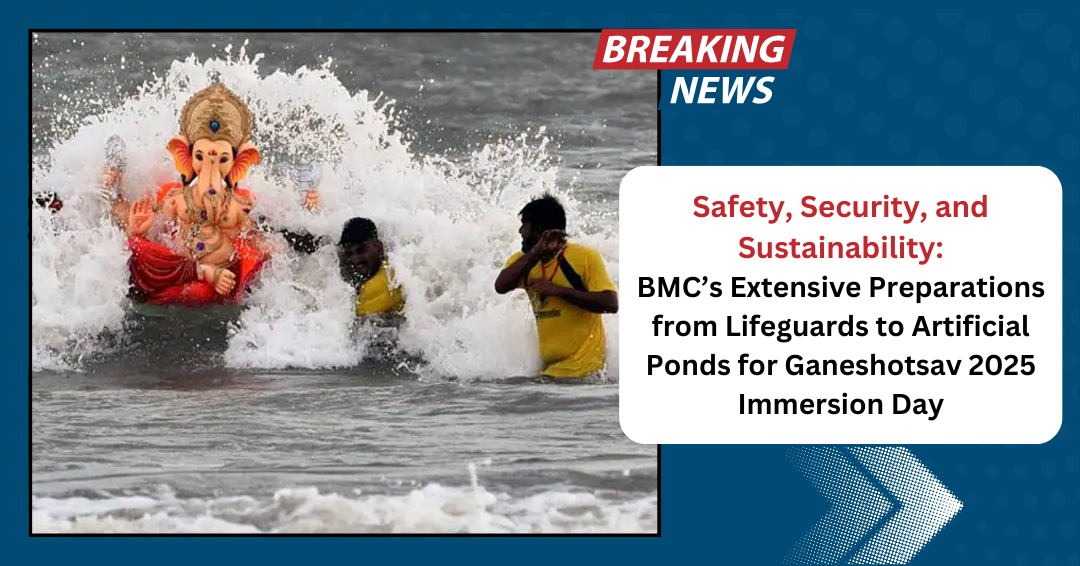
Source: News 18 Marathi
As Mumbai prepares to say goodbye to Lord Ganesha, the Brihanmumbai Municipal Corporation (BMC) has launched one of its most extensive safety and management plans to date. With lakhs of devotees expected to gather across the city over the next two days, civic officials emphasize that their priorities are clear—managing huge crowds, ensuring water safety, and reducing environmental impact. Municipal Commissioner Bhushan Gagrani, along with Additional Commissioner Dr. Amit Saini and festival coordinator Prashant Sapkale, is personally overseeing the arrangements, supported by a dedicated force of over 10,000 civic staff deployed across immersion sites.
This year, the civic body has made special efforts to balance devotion with environmental awareness. A total of 70 natural water bodies have been designated for visarjan, but to minimize ecological harm, nearly 290 artificial ponds have also been prepared across 25 wards. The BMC has appealed to both individual devotees and large mandals to prioritize these artificial immersion tanks. To further streamline the process, 66 German rafts have been arranged for smaller idols. For water safety, a strong team of 2,178 trained lifeguards will be on duty, supported by 56 motorboats stationed along the city’s prominent chowpatties. In addition, 594 kalash have been set up for collection of nirmalya (floral offerings), while 300 special vehicles will ensure eco-friendly transport and disposal of these ritual remains.
To deal with the expected rush, the civic body has established 245 control rooms across various departments. These will work in close coordination with 129 elevated watchtowers, 42 cranes at immersion points, and 287 welcome booths to guide citizens. Together, these measures are aimed at ensuring a smooth and systematic flow of devotees and processions at all immersion spots, especially at Girgaon, Dadar, Juhu, and Versova beaches where large crowds are anticipated.
Health and safety have also been given top priority. Across Mumbai, 236 first-aid centres have been set up, while 115 ambulances will remain on standby at critical locations. Temporary toilets have been placed strategically to handle the massive turnout. To ensure that immersions happening late into the night are safe, the BMC has installed over 6,000 floodlights and additional searchlights at immersion ghats and beaches. Civic officials have also issued warnings about natural marine hazards common during this season, particularly jellyfish and stingray stings. For emergencies, medical teams, 108 ambulance services, and the Mumbai Fire Brigade will remain available round the clock.
In keeping with digital accessibility, the BMC has uploaded the complete list of 290 artificial ponds on its official website. Devotees can access these through Google Maps, QR codes, and even WhatsApp chatbot services, ensuring hassle-free navigation to the nearest eco-friendly immersion facility.
Apart from physical arrangements, the civic administration has also issued a set of guidelines for devotees. Citizens have been requested not to enter deep waters, to strictly follow instructions from police and civic staff, and to ensure children are kept safe during the immersion processions. People are also urged to report any emergency immediately while refraining from spreading rumours that could create unnecessary panic. With high tides predicted on September 6 and 7, authorities have appealed to citizens for patience and discipline to avoid overcrowding and mishaps.
Speaking about the preparations, a senior civic official remarked, “Ganesh Visarjan is not just an occasion of faith but also one of shared responsibility. The arrangements made this year are meant to ensure that while people celebrate their devotion with full enthusiasm, they also remain safe and environmentally conscious.”
As Mumbai braces for the final farewell of Ganpati Bappa, the city stands at the intersection of tradition and modern civic planning. The massive deployment of manpower, safety measures, and eco-friendly initiatives all aim to create a visarjan that is not only heartfelt and memorable but also disciplined, secure, and respectful to the environment. This year, the farewell to Lord Ganesha is expected to be a blend of devotion, order, and responsibility—ensuring that the city’s most emotional festival ends on a safe and peaceful note.
Image Courtesy:
Related News
This article is based on publicly available information from credible sources (as mentioned above) and has been restructured using a combination of AI tools and manual editorial inputs to enhance clarity and readability. While we aim to maintain accuracy, there may be unintentional errors or misinterpretations. If you come across any incorrect or misleading information, please report it to us at info@bmcelections.com.
Copyright © 2026 All Rights Reserved | BMC Election