BMC Elections
- Past BMC Election Results
- Know your Booth Location
- Standing Committee Members
- BMC Elections 2017 Delimitation
- New Ward List Civic Elections 2025
- New Wards Maps for BMC Elections 2025
- BMC Election 2025 Date
- CEO Maharashtra
- Know Your BMC
- BMC News & Updates
- Wards
- Candidates
- Mumbai Corporators
- Advertise
- Contact
- Volunteer
- Privacy Policy
Mumbai Kabootarkhaana : Jain community holds talks with BMC chief over Kabootarkhaana, proposes new feeding zones for pigeons
- by Webdesk
- 28 Oct 2025
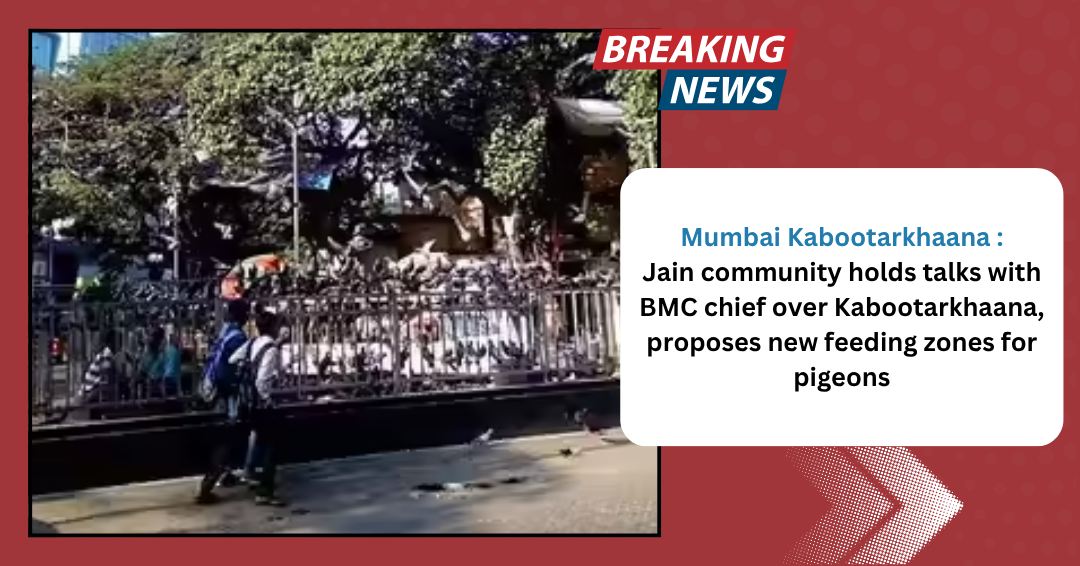
Source: The Times Of India
Mumbai witnessed an important meeting on Tuesday as a delegation representing members of the Jain community called upon Municipal Commissioner Bhushan Gagrani to discuss the ongoing concerns surrounding the city’s well-known Kabootarkhaana (pigeon-feeding areas). The delegation urged the Brihanmumbai Municipal Corporation (BMC) to identify and allocate alternative sites across the city where pigeons can be fed without causing inconvenience to local residents or disrupting civic spaces.
The meeting took place in the wake of several Kabootarkhaanas being closed down following directives from the court, which had raised concerns over hygiene, crowding, and public health issues caused by uncontrolled pigeon feeding. According to an official BMC statement, the civic administration has been strictly implementing the court’s instructions, resulting in the shutdown of pigeon-feeding areas in multiple parts of Mumbai.
During the interaction, Commissioner Gagrani assured the delegation that the BMC is sensitive to the sentiments of the Jain community and other citizens who consider feeding birds, especially pigeons, an act of compassion and religious importance. He added that the civic body will undertake a survey to identify new potential spots within the city where pigeons can be fed in a safe, regulated, and organized manner. Once suitable areas are finalized, the BMC will prepare a comprehensive report and submit the same before the Honourable Court as part of its compliance and action plan.
The Jain delegation highlighted that Kabootarkhaanas have been a part of Mumbai’s social and cultural fabric for decades. These spaces are not merely physical locations for feeding pigeons but are viewed by many as symbols of peace, kindness, and community service. However, they acknowledged that the feeding of pigeons must now adapt to the changing urban environment, ensuring that public hygiene and civic order are not compromised.
They further appealed to the BMC to establish designated pigeon-feeding zones in every administrative ward of Mumbai. These zones, the delegation suggested, could be set up at places that are away from crowded streets, hospitals, and residential clusters, minimizing health and cleanliness issues. The community members also proposed that the feeding could be allowed during specific hours of the day under controlled supervision to prevent excessive gathering of birds and accumulation of waste.
The civic administration, in its previous communication, had already invited public objections and suggestions on whether pigeons should be fed in a regulated manner, and if so, how such feeding should be managed—whether through restricted timings, limited quantities of grain, or specific feeding areas. The Jain community welcomed this participatory approach and offered to collaborate with the civic body to frame guidelines that strike a balance between religious traditions and civic responsibilities.
Officials present during the meeting emphasized that while feeding birds is an act of compassion, uncontrolled feeding in densely populated areas has been linked to sanitation problems, respiratory diseases, and traffic congestion. Therefore, a thoughtful policy is required that protects both public health and religious sentiments.
The BMC has assured that once potential sites are finalized, it will take into account infrastructure needs, such as proper cleaning facilities, waste management systems, and feeding area maintenance, to prevent littering and contamination. Moreover, awareness campaigns may also be organized to educate citizens about responsible bird-feeding practices and their environmental impact.
The Jain community leaders appreciated the civic chief’s openness and willingness to find a balanced solution. They expressed hope that the BMC’s decision to search for alternative Kabootarkhaana locations would help maintain Mumbai’s cultural essence while also promoting public cleanliness and safety.
In conclusion, the meeting between the Jain community and the BMC Commissioner underscored the importance of dialogue and cooperation between religious groups and civic authorities. The effort aims to create sustainable, well-managed pigeon-feeding areas across Mumbai that honor age-old traditions while aligning with modern urban health standards.
As the BMC prepares to submit its report to the Honourable Court, all eyes are now on how effectively the civic administration can balance compassion with civic responsibility, ensuring that Mumbai continues to respect both its heritage and its duty toward maintaining a clean and healthy city environment.
Image Courtesy:
Related News
This article is based on publicly available information from credible sources (as mentioned above) and has been restructured using a combination of AI tools and manual editorial inputs to enhance clarity and readability. While we aim to maintain accuracy, there may be unintentional errors or misinterpretations. If you come across any incorrect or misleading information, please report it to us at info@bmcelections.com.
Copyright © 2026 All Rights Reserved | BMC Election