BMC Elections
- Past BMC Election Results
- Know your Booth Location
- Standing Committee Members
- BMC Elections 2017 Delimitation
- New Ward List Civic Elections 2025
- New Wards Maps for BMC Elections 2025
- BMC Election 2025 Date
- CEO Maharashtra
- Know Your BMC
- BMC News & Updates
- Wards
- Candidates
- Mumbai Corporators
- Advertise
- Contact
- Volunteer
- Privacy Policy
Mumbai Civic Body Approves Controlled Pigeon Feeding at Four Additional Locations
- by Webdesk
- 01 Nov 2025
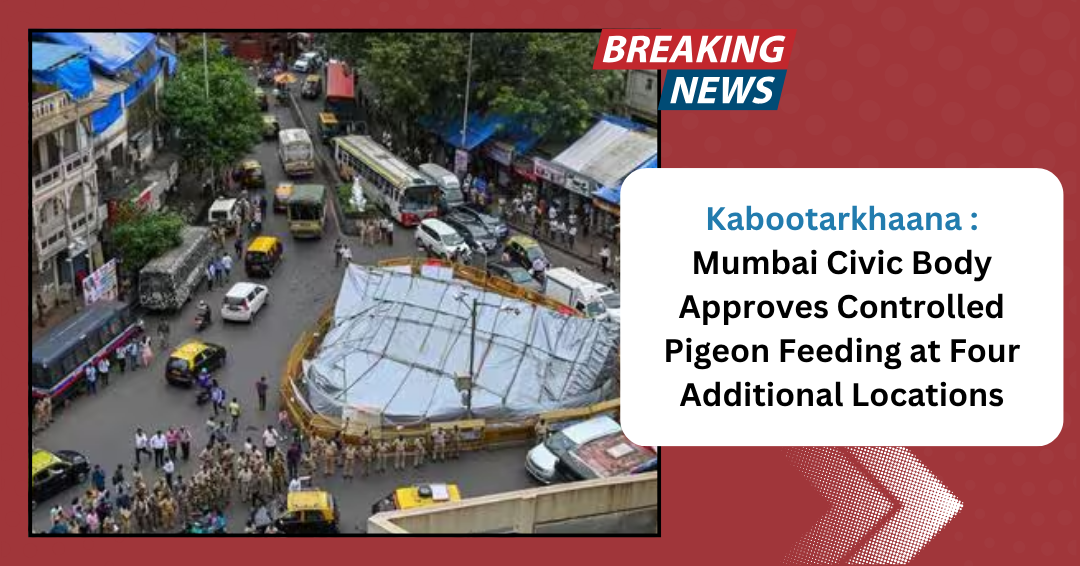
Source: Hindustan Times
Mumbai: The Brihanmumbai Municipal Corporation (BMC) has permitted controlled feeding of pigeons at four specific and isolated locations across the city. This permission will be valid only on an interim basis, and feeding will be strictly restricted to two hours each morning — between 7 a.m. and 9 a.m.
According to the civic body, this temporary arrangement will remain in place until the expert committee — appointed to study the impact of pigeon feathers and droppings on human health — submits its findings to the Bombay High Court. Once the report is reviewed and the court issues further orders on the petitions challenging the earlier ban on pigeon feeding, a final decision will be taken.
The civic body clarified that this move does not indicate a reopening of the previously closed pigeon-feeding sites. The 51 kabutarkhanas that were shut down earlier this year due to health concerns will remain closed until further orders, the BMC reiterated in its official statement issued on Friday.
Four New Temporary Feeding Spots Identified
As part of the new arrangement, the BMC has identified four separate spots across Mumbai where pigeon feeding will be allowed in a controlled and monitored manner. These locations include:
- Near the Worli Reservoir in the G South ward,
- The mangrove zone near Lokhandwala Back Road and beside the Versova sewage treatment plant in Andheri West,
- The creekside area near the old Airoli–Mulund Check Naka on the Airoli–Mulund Link Road in Mulund East, and
- Gorai Maidan in Borivali West.
At each of these locations, feeding will only be allowed during the morning hours of 7 a.m. to 9 a.m., under strict supervision. The BMC has emphasized that feeding must not interfere with vehicular or pedestrian movement, and the environment must remain clean at all times.
Civic Monitoring and Responsibilities Assigned
The BMC has directed that voluntary organisations managing these feeding zones will bear full responsibility for maintaining cleanliness, managing crowds, and preventing any form of obstruction or nuisance to the public.
These organisations must also promptly address any complaints raised by citizens and submit a written undertaking to the BMC, committing to follow all civic guidelines without deviation.
Additionally, the assistant commissioners of the respective wards will function as nodal officers, tasked with supervising the operations and ensuring the sites function smoothly. Their role will also include submitting periodic reports on maintenance and compliance at each site.
Health Awareness and Public Safety Measures
In addition to these arrangements, the BMC will install health awareness boards at all designated feeding locations. These boards will carry messages to educate citizens about hygiene risks associated with pigeon feeding, including allergies and respiratory issues that can arise from prolonged exposure to feathers and droppings.
The civic body believes that spreading awareness will encourage citizens to adopt responsible and hygienic feeding practices while also minimizing the health risks associated with close contact with pigeons.
The Background: A Controversial Ban and Court Intervention
The issue dates back to July 3, when the Maharashtra government directed the BMC to shut down all 51 kabutarkhanas in the city, citing serious health risks from pigeon droppings and feathers.
Following this order, the BMC immediately banned all public feeding of pigeons, sparking backlash from several citizen groups and activists who approached the Bombay High Court, challenging the move.
On August 7, the court clarified that it had not ordered the closure of kabutarkhanas but had also declined to stay the BMC’s closure directive.
Subsequently, on August 13, the court ordered the formation of an expert committee to scientifically assess the health impact of pigeons’ presence in urban environments. In compliance, the state government established a 13-member expert panel, tasked with evaluating the issue and submitting a report within 30 days of its first meeting.
Awaiting Final Court Decision
With the expert panel’s report still awaited, the BMC’s new decision to allow controlled feeding represents a temporary compromise — balancing the concerns of citizens who feed pigeons as part of traditional practices with the civic body’s responsibility to protect public health.
The final decision on whether kabutarkhanas will reopen or remain permanently closed now rests with the Bombay High Court, pending the submission and review of the expert committee’s findings.
Until then, pigeon feeding in Mumbai will continue under close supervision — confined to four locations, for two hours each morning, and in an environment that prioritizes hygiene, safety, and civic discipline.
Image Courtesy:
Related News
This article is based on publicly available information from credible sources (as mentioned above) and has been restructured using a combination of AI tools and manual editorial inputs to enhance clarity and readability. While we aim to maintain accuracy, there may be unintentional errors or misinterpretations. If you come across any incorrect or misleading information, please report it to us at info@bmcelections.com.
Copyright © 2026 All Rights Reserved | BMC Election