BMC Elections
- Past BMC Election Results
- Know your Booth Location
- Standing Committee Members
- BMC Elections 2017 Delimitation
- New Ward List Civic Elections 2025
- New Wards Maps for BMC Elections 2025
- BMC Election 2025 Date
- CEO Maharashtra
- Know Your BMC
- BMC News & Updates
- Wards
- Candidates
- Mumbai Corporators
- Advertise
- Contact
- Volunteer
- Privacy Policy
In three years, BMC intends to concrete all city roadways
- by Webdesk
- 30 Sep 2022
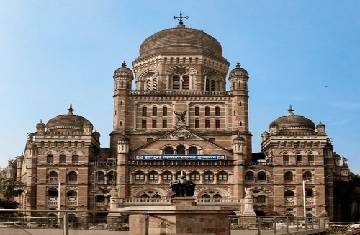
Iqbal Singh Chahal, Municipal Commissioner and BMC Administrator, submitted an action plan for a "pothole-free Mumbai" to the Bombay High Court on Friday, stating that within three years, every inch of the city's roads, lanes, and byways will be concreted. However, he went on to say that Mumbai won't be rid of potholes until the BMC takes over as the sole planning authority for maintenance projects.
Chahal was summoned to court by a division bench of Chief Justice Dipankar Datta and Justice MS Karnik to answer a contempt complaint brought by attorney Ruju Thakker citing the state's Municipal Corporations' willful disregard of the court's 2018 decision in a PIL on road repair. On Friday, Chahal appeared in court and delivered a PowerPoint presentation outlining his strategy for enhancing the city's roadways as well as the challenges the civic body faces.
"By when do you ensure citizens of Bombay of pothole-free roads?" said Chief Justice Datta. We will concretize all highways and byways, Chahal retorted. We have a three-year action plan that calls for concreteizing every square inch of Mumbai's roads. 900 km of the 2,050 km of roads covered by the BMC have so far been concreted, he claimed. By November 30, the action plan for patching potholes on significant state roadways should be finished.
He also provided a list of the 20 worst highways, totaling more than 125 kilometres. In three months, the asphalt will be completely covered over these. Instead of continually patching potholes, he declared, "the entire road will be covered in an asphalt carpet." Chahal had written to the Maharashtra Government in February 2021 requesting that the BMC become the exclusive planning authority in Mumbai for a comprehensive and coordinated development. The Western Express Highway and the Eastern Express Highway are now under the control of the civic organisation. Additionally, it received control of the roads in Cuffe Parade and Nariman Point.
There are currently 15 organisations that own 500 kilometres of roads in Mumbai. The majority of the potholes are on these roadways, but Chahal informed the bench that the locals blame the local government. Regarding the court's proposal that the BMC pave arterial roads first, Chahal responded that the plan was chosen based on the volume of traffic and the availability of workers. A cement concrete road has a 30-year term while an asphalt road has a five-year defect liability period. The court stated that it would keep an eye on the situation and requested that all authorities provide a report every two months.
Image Courtesy:
Related News
This article is based on publicly available information from credible sources (as mentioned above) and has been restructured using a combination of AI tools and manual editorial inputs to enhance clarity and readability. While we aim to maintain accuracy, there may be unintentional errors or misinterpretations. If you come across any incorrect or misleading information, please report it to us at info@bmcelections.com.
Copyright © 2026 All Rights Reserved | BMC Election