BMC Elections
- Past BMC Election Results
- Know your Booth Location
- Standing Committee Members
- BMC Elections 2017 Delimitation
- New Ward List Civic Elections 2025
- New Wards Maps for BMC Elections 2025
- BMC Election 2025 Date
- CEO Maharashtra
- Know Your BMC
- BMC News & Updates
- Wards
- Candidates
- Mumbai Corporators
- Advertise
- Contact
- Volunteer
- Privacy Policy
Future Water Security: BMC Pushes Gargai, Pinjal Dams and Desalination Plans for Mumbai 2041
- by Webdesk
- 04 Sep 2025
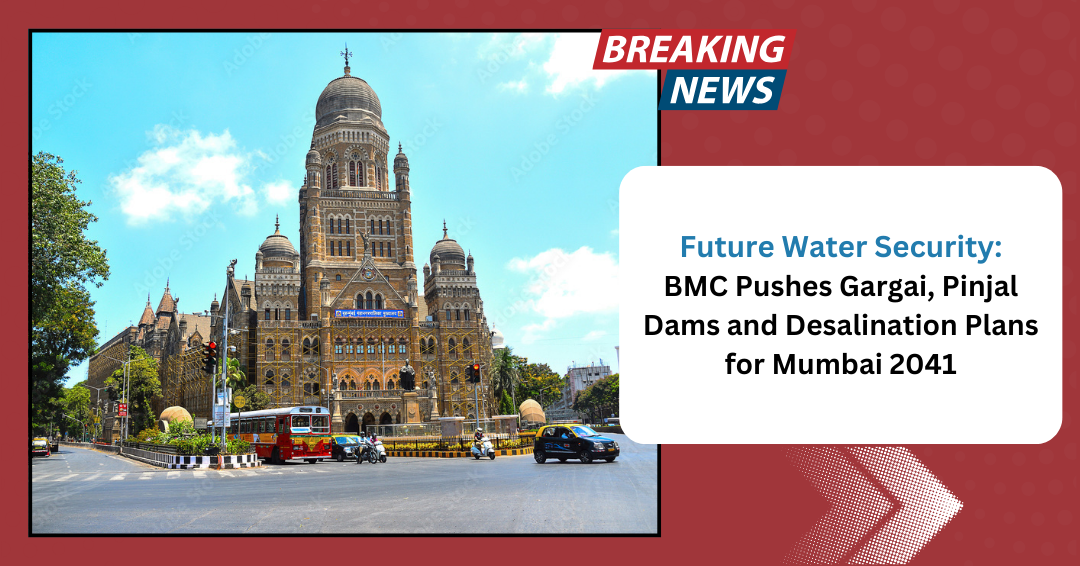
Source: Free Press Journal
Mumbai, India’s financial capital and one of the most densely populated cities in the world, is staring at a massive water crisis in the coming decades. Projections suggest that by 2041, the city’s daily water demand will soar to 6,535 million litres per day (MLD). To address this looming shortage, the Brihanmumbai Municipal Corporation (BMC) has drawn up a set of ambitious projects, the first since the completion of the Middle Vaitarna Dam back in 2014.
Among these projects, the long-delayed Gargai Dam is finally expected to see construction work begin after nearly ten years of waiting. Alongside this, the Pinjal Dam project and the Centre’s Damanganga–Pinjal Link project aim to supplement the city’s water reserves. Furthermore, the civic body has proposed setting up a desalination plant as well as a 12 MLD advanced tertiary treatment facility at Colaba. Together, these initiatives are projected to add 3,103 MLD of water supply, though the real challenge lies in completing them all within the next 16 years.
Current Water Shortage in Mumbai
At present, the BMC supplies around 4,000 MLD of water daily. However, the actual requirement is higher, leading to a deficit of nearly 500 MLD. As Mumbai’s population continues to expand, this gap is projected to widen by almost 50%, putting tremendous pressure on already strained resources.
To bridge this shortfall, the civic administration has planned large-scale projects. The Gargai Dam, once completed, is expected to supply 440 MLD, while the Pinjal Dam will provide around 865 MLD.
In addition to this, the Central Government, Maharashtra, and Gujarat have joined hands on the Damanganga-Pinjal inter-basin transfer project, which aims to divert 1,586 MLD of surplus water from the Damanganga river in Gujarat to the Pinjal river in Maharashtra. This ambitious initiative is designed to secure not only Mumbai’s rising water demand but also cater to needs of surrounding regions.
Activists Stress Awareness and Fixing Leakages
Even as these large-scale projects are being planned, activists have raised concerns about the time-consuming nature of such infrastructure and the urgent need for sustainable practices.
Vinod Gholap, president of Fight for Right Foundation, highlighted the sluggish pace of execution. He pointed out that it took BMC nearly a decade just to obtain permissions for the Gargai Dam project, and yet, construction is still pending. He emphasised that while projects are necessary, equal attention should be given to public awareness about water conservation. According to him, nearly 60% of potable water in the city is consumed for non-drinking purposes, such as washing and bathing, which must be reduced.
Similarly, Sitaram Shelar, founder of Pani Haqq Samiti, called for urgent measures to address leakages. He stated that 34% of the water supplied daily—about 1,400 MLD—is lost due to pipeline leaks and distribution inefficiencies. This wastage of treated water, he argued, is a more immediate concern and should be prioritised by the civic body.
Civic Body Responds: Environmental Hurdles and Rehabilitation Delays
On the other hand, civic officials have defended the BMC’s efforts and explained the reasons behind the delays. A senior official revealed that environmental clearances and rehabilitation of displaced villages were the primary hurdles in implementing the Gargai project.
“The Gargai Dam work has now gathered momentum,” the official said. “We have started land demarcation for the rehabilitation of six villages that will be affected. Once this process is complete, the actual construction work can begin.”
The official also confirmed that desalination efforts are being taken seriously. “We aim to commence work on desalination plants at Manori and Versova by the end of this year. Along with the advanced treatment facility at Colaba, these projects will significantly add to the city’s supply and reduce reliance on traditional sources.”
The Road Ahead
Mumbai’s water crisis is both urgent and complex. While large-scale projects like dams and desalination plants will add capacity, experts believe that conservation, leakage control, and efficient management are equally crucial. Balancing population growth, environmental sustainability, and infrastructure challenges will be the ultimate test for the civic body.
If executed successfully, these initiatives could safeguard Mumbai’s water security for decades. But any further delays may leave the city vulnerable to severe shortages, particularly as climate change intensifies rainfall variability and resource stress.
Image Courtesy:
Related News
This article is based on publicly available information from credible sources (as mentioned above) and has been restructured using a combination of AI tools and manual editorial inputs to enhance clarity and readability. While we aim to maintain accuracy, there may be unintentional errors or misinterpretations. If you come across any incorrect or misleading information, please report it to us at info@bmcelections.com.
Copyright © 2026 All Rights Reserved | BMC Election