BMC Elections
- Past BMC Election Results
- Know your Booth Location
- Standing Committee Members
- BMC Elections 2017 Delimitation
- New Ward List Civic Elections 2025
- New Wards Maps for BMC Elections 2025
- BMC Election 2025 Date
- CEO Maharashtra
- Know Your BMC
- BMC News & Updates
- Wards
- Candidates
- Mumbai Corporators
- Advertise
- Contact
- Volunteer
- Privacy Policy
Brihanmumbai Municipal Corporation: BMC Announces It Has Officially Received Three Detailed Proposals Regarding the Implementation of Systematic and Monitored Pigeon Feeding in Mumbai
- by Webdesk
- 18 Aug 2025
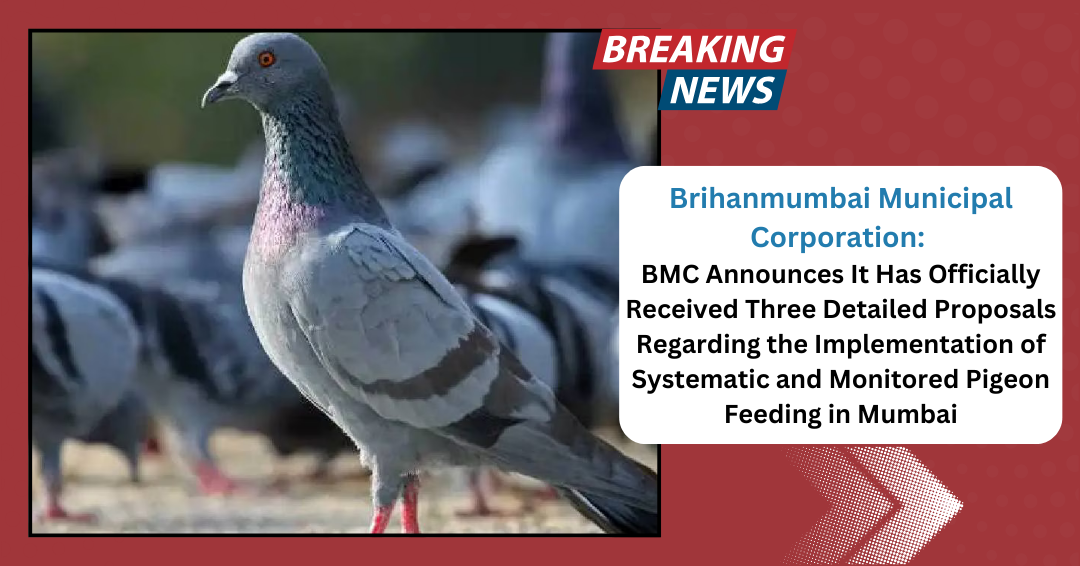
Source: The Times Of India
Mumbai: Acting on the directions of the Bombay High Court, the Brihanmumbai Municipal Corporation (BMC) has begun the process of inviting suggestions and objections from the public before taking a final call on whether controlled pigeon feeding should be permitted in the city. The civic body confirmed that it has already received three formal applications, including one from the Dadar Kabutarkhana Trust, seeking regulated feeding permissions. Citizens now have an opportunity to share their views on this sensitive and widely debated issue between August 18 and August 29.
The matter gained significance after the Bombay High Court’s division bench comprising Justices Girish Kulkarni and Arif Doctor, in its order dated August 13, stressed that the civic body cannot take arbitrary decisions on the matter. The court observed that once the BMC had earlier opted for closure of such feeding activities citing public health concerns, any reversal of that stand must be thoughtful, transparent, and involve citizens’ participation. “You (BMC) cannot now allow feeding without due process once you had earlier banned it for health reasons. A considered decision has to be taken. When an application is submitted, the BMC must issue a notice, invite objections from citizens, and only then arrive at a final decision,” the court stated.
Following this directive, the BMC announced that it has so far received three applications requesting permission for regulated pigeon feeding. These applications have been submitted by the Dadar Kabutarkhana Trust Board, Yasmin Bhansali & Company, and animal and bird rights activist Pallavi Patil. To maintain transparency, the civic body has said that all three applications will be made available for public review through its official website.
The BMC has also issued an appeal urging Mumbaikars to participate in the consultation process. Citizens can send their objections or suggestions regarding the matter to the designated email ID – suggestions@mcgm.gov.in. Those wishing to provide their feedback in written form can personally submit their responses at the office of the Executive Health Officer, located on the third floor of the F South Ward Office Building on Babasaheb Ambedkar Marg, Parel, during working hours.
Among the applicants, activist Pallavi Patil has made a detailed appeal requesting that the BMC permit feeding and watering of pigeons at their natural and habituated spots. Her proposal goes beyond traditional kabutarkhanas, urging that feeding be allowed at naturally developed pigeon colonies, traditional feeding zones, as well as residential and public spaces where pigeon populations already thrive. Patil has also recommended that the civic body take proactive measures to establish water provision facilities for pigeons at such locations to ensure their welfare.
The core of the debate revolves around balancing two major concerns – animal welfare and public health. While advocates of pigeon feeding argue that it is a long-standing cultural and religious practice that should be preserved in a regulated manner, health experts have repeatedly highlighted the potential risks posed by large uncontrolled pigeon populations. Exposure to pigeon droppings is known to trigger respiratory illnesses and other health complications, especially among the elderly and children.
By seeking public views, the BMC aims to create a middle ground where traditions can be respected without compromising health standards. The High Court’s insistence on public participation is also being seen as a way to ensure that the civic body does not face accusations of one-sided decision-making in the future.
The issue of pigeon feeding has long been contentious in Mumbai, particularly in areas like Dadar Kabutarkhana, where feeding activities attract hundreds of pigeons daily. While many citizens view the practice as an act of compassion and devotion, others have raised concerns about cleanliness, hygiene, and the rapid rise in pigeon numbers in urban spaces.
With the consultation process now open, the next few weeks will be crucial in determining the city’s approach toward this matter. The BMC has assured that every suggestion and objection received will be carefully reviewed before it finalizes its decision. Ultimately, the outcome will reflect not only judicial oversight but also the collective voice of Mumbaikars.
As the August 29 deadline approaches, civic officials expect a significant response from the public, given the strong opinions surrounding the issue. Whether the final decision leans towards strict regulation, partial allowance, or continuation of restrictions, it will undoubtedly set an important precedent for managing similar issues that balance cultural practices with public health in India’s financial capital.
Image Courtesy:
Related News
This article is based on publicly available information from credible sources (as mentioned above) and has been restructured using a combination of AI tools and manual editorial inputs to enhance clarity and readability. While we aim to maintain accuracy, there may be unintentional errors or misinterpretations. If you come across any incorrect or misleading information, please report it to us at info@bmcelections.com.
Copyright © 2026 All Rights Reserved | BMC Election