BMC Elections
- Past BMC Election Results
- Know your Booth Location
- Standing Committee Members
- BMC Elections 2017 Delimitation
- New Ward List Civic Elections 2025
- New Wards Maps for BMC Elections 2025
- BMC Election 2025 Date
- CEO Maharashtra
- Know Your BMC
- BMC News & Updates
- Wards
- Candidates
- Mumbai Corporators
- Advertise
- Contact
- Volunteer
- Privacy Policy
BMC to start genome sequencing laboratory at Kasturba hospital
- by Webdesk
- 16 May 2021
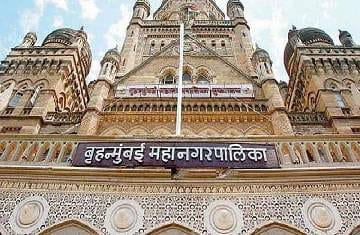
Mumbai: Kasturba Hospital launches genome sequencing for the first time by citizens to examine the various strains of the coronavirus and their impact on humans. The civic body also decided to research the coronavirus, for which an expert committee will be formed to analyze the various strains of Covid-19 and their impact on humans. Genome sequencing involves the analysis of the genetic code of a virus, which allows scientists to pinpoint the exact location of a mutation. Mutations in specific proteins of the virus make it more viral.
Sequencing can help analyze its virility and its mode of transmission. Genome sequencing is time-consuming and expensive, costing between Rs 7,000 and Rs 12,000 per sample. Additional Municipal Commissioner Suresh Kakani said a research center was being set up in Kasturba to sequence the genome of the virus found in the case. It will start soon as they are holding meetings with all the participants for this. Moreover, they will use various strategies to deal with cases with different animals. Through this initiative, reliance on the National Institute of Virology and the Centers for Disease Control will be reduced. Our main objective is to help the State identify the number of active stressors in Mumbai and their impact on the human body and to determine the public health strategies required to control changes or spreads in the treatment protocol.
We are also planning to start a super specialty hospital for the treatment of various ailments,” he said. Kakani said BMC's Kasturba Molecular Diagnostic Lab is compatible with IIT-Bombay's start-up high stock analytics for sequencing in-sequences. So far, 40 samples have been collaboratively arranged. IIT received 200 samples for this. We plan to look at samples taken from a neighborhood or family cluster to see if a specific mutation transmission pattern is leading.
However, the samples may deteriorate or be transported to different temperatures when transported to another city.
We have limited resources to use legally. The laboratory will collect a nanopore sequencing technology that does not require a large investment and is less expensive if more samples are processed at once. The other two most common sequencing technologies are Illumine and ion torrent.
At the same time, the National Center for Disease Control (NCDC) recently confirmed that the tested samples contained a dual mutant variant and that the data were inadequate due to its jump. The dual mutant variant was detected in 206 samples in Maharashtra. In Nagpur, it is more than 20% of the samples, but there is not enough data to link it to the nature of the jump, said a senior health official in the state health department.
Image Courtesy: BMC Election results
Related News



This article is based on publicly available information from credible sources (as mentioned above) and has been restructured using a combination of AI tools and manual editorial inputs to enhance clarity and readability. While we aim to maintain accuracy, there may be unintentional errors or misinterpretations. If you come across any incorrect or misleading information, please report it to us at info@bmcelections.com.
Copyright © 2026 All Rights Reserved | BMC Election